Replacing a Lost or Stolen Virginia Driver’s License Online
Replacing a lost or stolen Virginia driver’s license online can be straightforward, but it helps to separate a replacement from a renewal and check the official service before you begin. The Virginia DMV offers online replacement services, but transaction options and requirements can depend on your record. Here’s how to prepare, protect your information, and follow up if the replacement does not arrive as expected.
First, confirm that a replacement is the right transaction
A missing license does not automatically mean you need to renew it. A replacement is generally the transaction to consider when your credential is lost, stolen, or damaged and you still need the same credential rather than a new renewal. Renewal and replacement are different tasks, so choose carefully when you enter the Virginia DMV’s online driver services.
According to the Virginia Department of Motor Vehicles, Driver’s license and CDL renewals and replacements can be processed through Virginia DMV online driver services. The Virginia Department of Motor Vehicles also says customers can replace a driver’s license or CDL online through the Virginia DMV. These statements establish that online replacement is an available service, but they do not mean every driver or every situation will be able to complete the transaction online.
Before starting, consider what happened to the credential and what you need the replacement to do:
- Lost: You cannot locate the license and do not know where it is.
- Stolen: You believe someone took it or may have access to it.
- Damaged: The card is still in your possession, but the information or card itself is difficult to use.
- Expired or close to renewal: The issue may involve renewing rather than simply replacing the credential.
- Information changed: Your name or other record details may need to be updated, which can be a separate transaction.
- Address changed: You may need to update the address in your DMV record in addition to replacing the card.
These descriptions help you identify the problem; they do not establish the Virginia DMV’s exact eligibility rules. Read the transaction description in the official service and follow the instructions it gives for your record. If the service identifies a different task, or says the replacement cannot be completed online, do not keep trying to force the request through another transaction type.
A replacement is not a substitute for checking whether your license is current, whether your DMV record is accurate, or whether another issue is affecting your driving privileges. If you are uncertain whether you need a replacement or a renewal, compare the procedures in Renewing Your Virginia Driver’s License Online and Replacing a Lost or Stolen Virginia Driver’s License Online. The second title is this article, so use the renewal information for comparison and return here for replacement-specific preparation.
It is also worth distinguishing the physical card from the driving privilege recorded by the state. A missing card can create practical problems when you need to show identification, but do not assume that ordering a replacement resolves a suspension, restriction, name discrepancy, or other record issue. The online service’s result and the official Virginia DMV record are the appropriate places to confirm what the transaction covers.
Prepare before opening the online service
A few minutes of preparation can help you avoid starting the wrong transaction or discovering partway through that you need to check information first. Use the Virginia DMV’s official online driver services rather than a search result or message that simply claims to provide a replacement. You complete the transaction with the Virginia DMV, not through this independent guide.
Before you begin, think through the following:
- Which credential is missing? Make sure you are selecting a driver’s license replacement rather than a learner’s permit, identification card, or commercial credential task.
- Is the license lost or stolen? Be ready to describe the situation accurately if the service asks.
- Has your address changed? Confirm that the address in your DMV record is appropriate for receiving the replacement. If it is not, review the official instructions for updating it.
- Has your legal name changed? A name update may involve separate records or supporting documents. Do not assume the replacement request will change the name printed on the card.
- Is the license expired or near its renewal point? Check whether the official service directs you to a renewal instead.
- Are you able to access your account or verify your identity? If the service requires account access or identity checks, use the official prompts and avoid sharing account details with anyone who contacts you unexpectedly.
- Can you receive mail safely? Consider whether the address on file is current and whether you will be able to retrieve the replacement there.
The precise information and documents needed can depend on the official process and your record. Do not rely on a generic checklist as a promise that a particular document will be accepted. If the Virginia DMV asks for information you do not have, pause and consult the official instructions before submitting a transaction with guesses or mismatched details.
A useful practice is to gather your own existing records before signing in. That may mean checking the information you have available about your license, confirming your current mailing arrangements, and having access to the contact method used for your DMV account, if applicable. Keep sensitive information private. You should enter it only into the official Virginia DMV service, not into a form reached through an unsolicited text, email, or phone call.
If you are planning to do other DMV tasks at the same time, separate them from the replacement unless the official service clearly offers a combined transaction. A replacement request may not update your address, change your legal name, renew an expired credential, or resolve a record hold. For a broader view of which online services and office tasks differ, see Virginia DMV Online Services vs In-Person Trips. If you are unsure which tasks require a visit, Which Virginia DMV Driver Tasks Require an Office? can help you plan what to confirm before starting.
| Your situation | What to check before choosing a transaction |
|---|---|
| License is lost | Look for the driver’s license replacement option in official Virginia DMV online driver services. |
| License is believed stolen | Check the replacement instructions and consider separate steps to protect your identity and accounts. |
| License is damaged | Confirm whether the online service accepts a damaged-card replacement or directs you to another process. |
| License is expired or nearing renewal | Check whether the Virginia DMV directs you to renew rather than request a replacement. |
| Address changed | Check whether the address on your DMV record needs a separate update before the card is mailed. |
| Legal name changed | Review the name-change process; do not assume a replacement request updates legal information. |
| Online request is unavailable | Follow the Virginia DMV’s direction on the next available method rather than submitting a different transaction. |
The table is a decision aid, not a statement of eligibility. The Virginia DMV’s online service determines what options are available for your record.
How to request the replacement online
The online request should begin with the Virginia DMV’s official driver services. The exact screens and prompts can change, so use the instructions displayed during the transaction rather than expecting a particular button name or sequence.
A careful approach looks like this:
- Open the official Virginia DMV driver services. Confirm that you are using the state agency’s service before entering personal information. Do not follow a replacement link from an unexpected message without independently verifying it through the official agency.
- Choose the driver’s license replacement task. Read the option’s description. If the service presents a renewal, replacement, or another task, select the one that matches your situation rather than choosing based only on the fact that your card is missing.
- Sign in or complete the identity checks requested by the service. Follow the official prompts. If you cannot access an account or pass a verification step, use the agency’s stated help or alternate process.
- Review the personal information shown. Check that the record displayed belongs to you and that the details are accurate. Pay particular attention to the mailing address and any other information the service asks you to confirm.
- Answer the transaction questions accurately. If asked whether the card was lost, stolen, or damaged, select the truthful description. Do not enter information you cannot verify.
- Review any instructions, charges, or limitations shown before proceeding. Costs and transaction terms can change, and the official service is the place to check current details. Do not rely on a past receipt, an old notice, or an outside summary for a current amount.
- Submit the request only after checking the summary. Make sure the task is a replacement and not a different service. Keep the confirmation or transaction reference available for follow-up.
- Follow the delivery instructions. The online service may explain how the card will be sent and what to do if it does not arrive. Use those instructions as your reference.
These are practical checkpoints, not a guarantee that every applicant will see the same sequence. The service may offer different prompts based on the account or transaction, and it may stop the online request if your situation needs another method.
A common mistake is to move too quickly through the transaction summary. Before submitting, read what the service says it is doing. Confirm that the request is for a replacement, not a renewal or an unrelated credential. Check the address displayed, especially if you have moved or receive mail somewhere different from where you live. If the address is incorrect, do not assume that the replacement request will fix it automatically.
After submission, keep a record of the confirmation and any instructions. A confirmation can help you distinguish a completed request from an incomplete attempt. It can also make it easier to explain the transaction when you contact the Virginia DMV or use an official tracking tool. Avoid keeping sensitive information in an insecure place; a transaction reference and the date of the request may be enough for your own follow-up.
If you need help creating or accessing an online account, Virginia DMV Online Replacement: Account Setup and Cost covers account-related considerations. Account setup is separate from the replacement decision itself: first make sure you are using the official Virginia DMV service, then follow its directions for access. The article title includes cost, but the current amount and any terms should be checked with the Virginia DMV rather than assumed from an older reference.
Once you have submitted the request, you may want to check its progress rather than submitting another replacement immediately. Duplicate attempts can complicate your understanding of which request is active. If the service or confirmation gives you a way to check status, use that route first. How to Track Your Virginia Driver’s License Delivery explains what to consider when following a mailed credential.
If the license was stolen, protect your information too
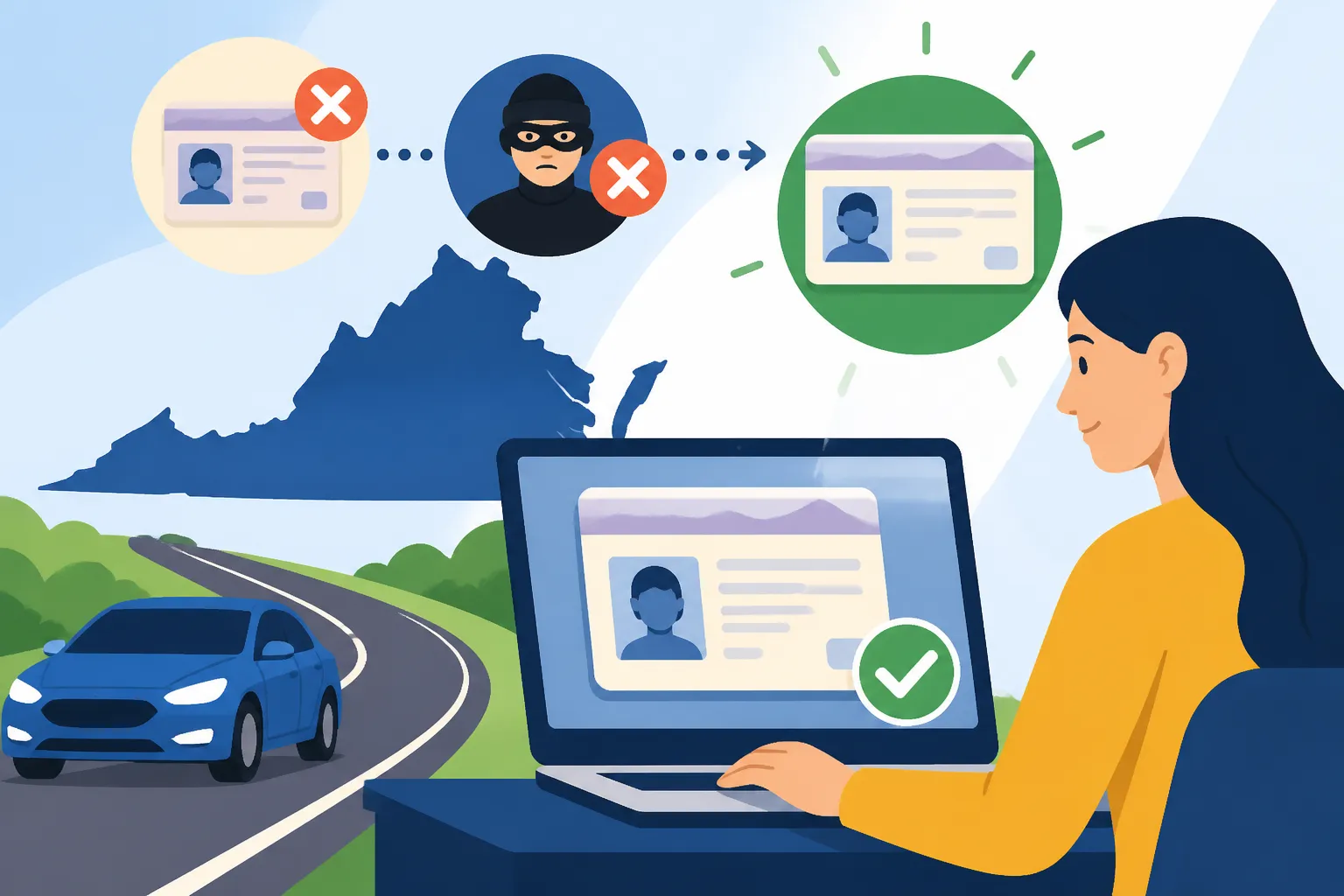
A stolen license creates a different concern from a card that has simply been misplaced: someone else may have access to information printed on it. Requesting a replacement addresses the missing credential, but it does not automatically protect other accounts or resolve every possible misuse of personal information.
Start with the facts you know. If you can identify where and when the license went missing, keep a private record of those details. If other items were taken at the same time, consider the security steps appropriate to those items as well. For example, stolen payment cards, account credentials, or personal documents may require action with the relevant bank, account provider, or other organization. The steps depend on what was lost, so do not assume the license replacement process will notify those organizations or secure those accounts.
Be cautious about requests for your personal information after the theft. A message that claims your replacement is blocked or that your identity must be verified through an unfamiliar link deserves careful scrutiny. The Virginia DMV online service is the place to begin or check an official replacement request. If an unexpected caller, text, or email asks you to provide account credentials or sensitive information, do not treat the message as legitimate solely because it refers to the DMV.
It may help to separate your response into two tracks:
- Replace the credential: Use the official Virginia DMV service and follow its current instructions.
- Protect other information: Contact the relevant provider or organization if other documents, accounts, or financial tools were also taken or exposed.
- Watch for unfamiliar activity: Pay attention to account notifications or transactions you do not recognize, and use the proper provider’s official channels to report them.
- Keep records: Save the DMV transaction confirmation and any communications with other organizations, while storing them securely.
- Avoid unnecessary repeat submissions: Check the status of the original replacement request before beginning another one.
These are general precautions, not a claim that a particular report or identity-protection procedure is required by the Virginia DMV. The available reporting options depend on the circumstances. If you want to know whether the agency requires documentation for your specific stolen-license situation, check the instructions in the official service or contact the Virginia DMV directly.
If the card was lost rather than stolen, it is still sensible to keep personal information secure. But the response can be simpler: check the likely places the card may have been left, decide whether you are comfortable proceeding with a replacement, and complete the official transaction if appropriate. Avoid making a theft report merely because you cannot find the card unless you have a basis to believe it was stolen.
Drivers who may need to show a credential soon should avoid assuming that a replacement request itself is proof of identity or permission to drive. The official confirmation may explain what it does and does not establish. If you need to drive while waiting, consult the Virginia DMV’s current guidance for your exact situation rather than relying on a general statement about pending replacements. Need to Drive Today? Using a Virginia DMV Temp Confirmation and Handling an Expired Virginia License While Waiting for Mail address related questions, but do not treat another driver’s situation as automatically applying to yours.
After submitting: confirmation, delivery, and follow-up
Once the Virginia DMV accepts an online request, the next concern is whether the transaction completed and whether the replacement reaches you. Use any confirmation, status option, or delivery instructions provided by the official service. Keep those details until you have the replacement and have confirmed that the card is correct.
A sensible follow-up plan is:
- Save the confirmation. Keep the transaction details in a secure place. If the request fails or the delivery takes longer than expected, those details can help you explain what happened.
- Check the address used. If the confirmation displays an address, review it. If you spot an error, contact the Virginia DMV through official channels for instructions rather than assuming you can intercept or redirect the card.
- Use the stated status method. If the Virginia DMV provides a way to track delivery, use it before starting another request. For more on this step, see How to Track Your Virginia Driver’s License Delivery.
- Watch for official notices. The agency may provide instructions if it needs more information or cannot complete the request online. Verify the source of any communication before responding.
- Inspect the replacement when it arrives. Check the printed information. If something appears wrong, follow the Virginia DMV’s instructions for correcting it.
- Keep the old card’s status in mind if it turns up. Do not assume a recovered card should be used after requesting a replacement. Check the official guidance for what to do with an older credential if a new one has been issued.
Delivery timing and tracking options can depend on the agency’s process, so do not rely on an assumed arrival date. If you have not received the card within the timeframe stated by the Virginia DMV, use the agency’s directions to ask about the request. Avoid making a second payment or submitting another transaction until you know whether the first request is still active and what the agency recommends.
If the replacement is returned or sent to an address where you cannot receive it, the next step depends on the reason and the current DMV record. Confirm the address associated with the request and ask the Virginia DMV what it wants you to do. A replacement card is not necessarily forwarded like ordinary mail, and mail handling can depend on postal and agency processes. For general context on mailed credentials, see Postal Forwarding Rules for Mailed State Driver’s Licenses and Lost Your Virginia License? Why USPS Won’t Forward Replacements.
If the status is unclear, be ready to explain the basic sequence: when you submitted the request, whether you received a confirmation, what address was shown, and what the status tool reports. Keep the discussion focused on the replacement. If the issue is actually an account access problem, an address update, or an incorrect record, say so; the agency may direct you to a different service.
A delayed card can be stressful if you need identification. Consider what other identity documents you can use for the specific situation, but confirm acceptance with the organization requesting identification. Rules for identification differ by setting, and a pending replacement does not guarantee that another organization will accept a receipt or confirmation. If you need to travel, complete a financial transaction, or verify identity for a separate service, ask that organization what it accepts rather than assuming the missing Virginia license can be replaced by a transaction receipt.
When online replacement may not work
An online service can be convenient, but not every record or request will fit its available options. If the Virginia DMV service does not let you proceed, treat that as a signal to check the reason rather than repeatedly submitting the same request.
Online replacement may be interrupted or unavailable for reasons such as:
- The service cannot confirm your identity or account access.
- Information in the DMV record does not match what you entered.
- The address on file needs attention.
- The credential is expired, near renewal, or associated with another transaction.
- Your name or another personal detail needs a separate update.
- The service directs you to provide information or complete a step through another channel.
- A record issue requires agency review.
This list describes common types of administrative obstacles in online transactions; it is not a list of Virginia DMV eligibility rules. The service will indicate what applies to your situation, if anything. Follow the specific instruction it provides and ask the Virginia DMV if you cannot tell what is blocking the request.
Do not choose a different transaction simply because it appears available. For example, submitting a renewal when you only need a replacement could lead you into a process that does not match your goal. Likewise, trying to use a name-change or address-change service as a workaround may not solve a replacement problem. Choose the task that describes your need and follow the official direction if the service says another method is required.
If an office visit becomes necessary, plan it as a separate task. Use the Virginia DMV’s official office locator to find a suitable location and check current hours and services before leaving. Do not assume that every location handles every driver transaction, or that a DMV Select offers the same services as a full-service customer service center. Virginia DMV Select vs Full-Service Center: Which Is Faster? can help explain why the type of office matters, while Documents to Bring When Visiting a Virginia Customer Service Center can help you think through visit preparation. Confirm the documents and service availability with the Virginia DMV for your case.
If you cannot access the online account, use the official agency’s account-recovery or support options. Do not give your password or verification code to someone who offers to complete the replacement for you. If the site shows an error, note the message and when it occurred. That information can be useful when asking the agency for help. If the transaction appears to have gone through but you are unsure, check the status before repeating it.
The right fallback depends on the reason the online transaction failed. A mismatch may require correcting a record; an account issue may require access recovery; a service restriction may require a different transaction channel. The Virginia DMV can tell you which applies. Applying Online Before Visiting the Virginia DMV: What Happens First? offers related context for drivers who may need to begin online and continue in person.
Avoiding errors and protecting yourself from scams
A missing license can make people anxious to act quickly. That urgency can also make it easier to overlook a wrong transaction, incorrect address, or fraudulent message. Slow down enough to verify the service and review what you submit.
Before submitting, check that:
- You are using official Virginia DMV online driver services.
- You have selected a driver’s license replacement rather than another credential task.
- Your information matches your DMV record as the service displays it.
- The mailing address is correct for receiving the replacement.
- You have read any notices about additional steps or limits.
- You understand any amount or transaction terms shown by the official service.
- You have saved a confirmation or know how to check the request status.
Be alert to messages that use fear or pressure. A suspicious notice might claim that your license is about to be suspended, that a replacement is being held, or that you must immediately pay through a link. Do not rely on the sender name or a logo alone. Instead, go to the Virginia DMV’s official services through a route you trust and check your account or the agency’s instructions there. The Virginia DMV also provides guidance on suspicious messages in Avoiding Scams: Virginia DMV Rules on Texts and Fine Alerts.
If you already clicked a suspicious link or shared information, take the steps appropriate to what you disclosed. If you entered account credentials, use the relevant official account-recovery or security process. If financial information was shared, contact the financial provider through its official channel. If the message concerns a DMV transaction, verify its status directly with the Virginia DMV. The response depends on the information involved, so do not assume that a license replacement automatically reverses or blocks every risk.
Keep copies of relevant notices, receipts, and error messages, but avoid sending sensitive documents to an unverified address. When asking for help, use the Virginia DMV’s official contact or support options. The agency’s office locator can help you find an office if the transaction requires an in-person visit; check current services and hours before going.
Frequently Asked Questions
Can I replace a lost Virginia driver’s license online?
The Virginia Department of Motor Vehicles says customers can replace a driver’s license or CDL online through the Virginia DMV. Whether your specific request can be completed online depends on the options and instructions shown for your record.
Is replacing a license the same as renewing it?
No. A replacement concerns a missing, stolen, or damaged credential, while a renewal concerns renewing the credential. If your license is expired or near renewal, check the Virginia DMV’s instructions to see which transaction applies.
What should I do if my license was stolen?
Use the official Virginia DMV service to check replacement options. If other items or account information were also taken, contact the relevant organizations through their official channels. A replacement request does not automatically address other possible misuse.
What if I submitted the request but my replacement has not arrived?
Check the confirmation and any status or delivery instructions from the Virginia DMV. If the card is outside the timeframe stated by the agency, contact the Virginia DMV before submitting another request.
Do I need to visit an office if the online service will not accept my request?
Not necessarily. Follow the reason and next step shown by the service. If it directs you to another channel or you cannot determine what is needed, contact the Virginia DMV and confirm any office’s services and current hours before visiting.
Sources
- Virginia Department of Motor Vehicles — Online Services | Virginia Department of Motor Vehicles (checked November 11, 2026)
Disclaimer
This article is for general informational purposes only and does not constitute professional advice. Laws, prices and regulations vary by location and change over time. Consult a qualified professional for guidance on your specific situation. Virginia Driver Guide is not a government agency and is not affiliated with any state motor vehicle department.