How to Renew Your Virginia Driver’s License by Mail
A mail renewal can save a trip to a Virginia DMV office, but it is only an option for eligible drivers. The hard part is knowing whether you qualify, what the renewal notice actually requires, and how to handle timing if your license is close to expiring. Use the steps below to check eligibility, prepare a complete packet, and avoid relying on a mailed application as proof that you may drive.
How Virginia mail renewal works
Virginia drivers may be able to renew a driver’s license by mail when the Virginia Department of Motor Vehicles (DMV) makes that option available to them. It is not a universal renewal method. Your eligibility and the instructions for completing the transaction depend on your record and the notice or other information the DMV provides.
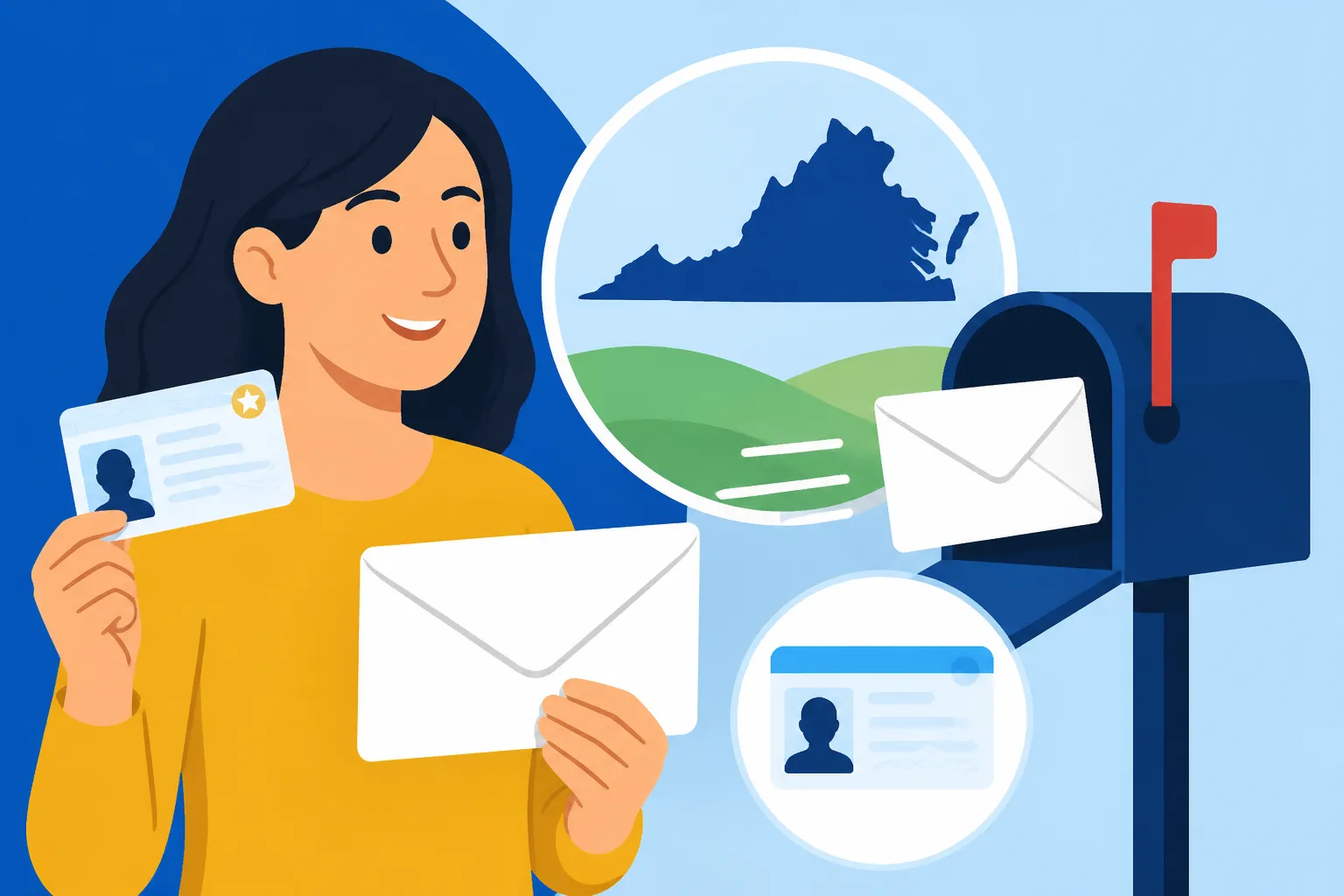
The mail process is different from renewing online or visiting a customer service center. You send the required information and payment to the DMV, then wait for the agency to process the renewal and mail the new credential. You do not receive a new license at the time you send the packet, and mailing an application does not, by itself, extend your existing license.
Start with any renewal notice you received. Read the entire notice rather than treating it as a routine reminder. It may identify the renewal options available to you, explain what to include, and give instructions about payment and delivery. If you do not have a notice, do not assume you can use an old packet or copy someone else’s instructions. Check your current eligibility and requirements directly with the Virginia DMV.
A notice is useful, but it is not a substitute for checking whether anything has changed since it was issued. For example, you may have moved, changed your legal name, received a new credential, or discovered a problem with your driving record. If your situation no longer matches the information on the notice, pause before mailing anything. A routine renewal packet may not resolve a separate record or identity issue.
Mail renewal is best viewed as a convenient option for a straightforward transaction—not a way to bypass a requirement that the DMV says must be handled another way. If your renewal involves a required in-person vision screening, identity-document review, testing, or another unresolved matter, the DMV may direct you to complete that step before it can renew your license.
For a broader comparison of renewal options, see Renewing Your Virginia Driver’s License Online and Renewing Your Virginia Driver’s License in Person. If the DMV’s notice says mail is available to you, follow the current instructions for that specific transaction.
Check eligibility before preparing the packet
Eligibility is the first decision. Do not spend time filling out paperwork or arranging payment until you know the DMV will accept a mail renewal in your circumstances. The renewal notice is usually the clearest starting point. If it is missing, unclear, or out of date, confirm the current requirements with the Virginia DMV.
Consider the following before you mail a renewal:
- Is mail listed as an option for you? A notice may offer a particular set of renewal methods. Do not infer that mail is available just because you have renewed by mail in the past.
- Is the credential eligible for renewal? A driver’s license renewal is not the same as replacing a lost license, correcting information, or applying for a different type of credential.
- Does the DMV require an in-person step? A required vision screening, document check, test, or other service can change where and how you must complete the transaction.
- Is your record clear for renewal? An outstanding requirement or restriction may prevent a routine renewal from going through.
- Has your information changed? A move, legal-name change, or other record update may require separate documents or a different process.
- Are you renewing early or after expiration? The timing may affect the steps you need to take. Confirm the rules for your specific expiration date rather than assuming a mailed request will be processed before then.
- Does the notice still match your situation? If the notice refers to a prior address or a credential you no longer have, confirm what the DMV needs before sending documents or payment.
Your age can matter, too. Virginia has different renewal considerations for some older drivers, including a shorter renewal cycle and a vision-screening requirement for drivers age 75 or older. Do not assume that a mailed renewal is available simply because a notice arrived. Check the age-specific requirements in Virginia Driver’s License Renewal Rules at Age 75 and Passing the Virginia DMV Vision Test at Age 75 or Older.
An online account or renewal notice may also show that you cannot complete a routine renewal through the method you expected. Common blocks can include unresolved DMV requirements, an ineligible credential, or a need to provide updated information. See Common Disqualifiers That Block Virginia Online License Renewal for examples of issues that can interfere with a renewal. The details of online eligibility are not automatically identical to mail eligibility, but a known problem with your record is a reason to verify before sending a packet.
Mail renewal is not the same as a replacement
If your license is lost, stolen, damaged, or otherwise unavailable, you may need a replacement rather than a renewal. A renewal updates a credential that is nearing its expiration date; a replacement addresses a credential that is missing or unusable. Choosing the wrong transaction can waste time and may leave you without the document you need.
If your license is lost or stolen, check the replacement process instead of sending renewal paperwork solely because the expiration date is approaching. If the license is both missing and near expiration, ask the DMV which transaction applies to your record. The same caution applies if you need to correct a name, address, or other personal detail at the same time.
Mail renewal may not be the right route for a REAL ID change
Renewing a license and upgrading it to REAL ID are separate issues. If you want to change from a standard license to a REAL ID-compliant credential, do not assume a mail renewal can complete the upgrade. REAL ID applications can require identity and residency documents to be presented according to DMV rules.
If you already have a REAL ID, verify whether your renewal can retain that status through the method offered to you. If you are trying to add the REAL ID designation, review Upgrading to REAL ID During Your Virginia License Renewal and confirm whether an office visit and supporting documents are required.
Prepare the information and documents the notice requests
Once you confirm mail renewal is an option, use the instructions provided for your transaction as your checklist. Requirements can differ, so there is no safe universal packet that applies to every driver. Do not include extra original documents just to be cautious; send only what the DMV asks for, and follow its directions about originals, copies, signatures, and payment.
A practical preparation process is:
- Read the notice from beginning to end. Look for the renewal method, required sections, signature instructions, payment directions, and any documents the DMV specifically requests.
- Check the personal information. Compare your name, address, and other listed details with your current information. If something is wrong, determine whether it can be corrected as part of renewal or requires a separate transaction.
- Complete every required field. Follow the notice’s directions for blank fields, checkboxes, and signatures. A form that is incomplete or unsigned can delay processing or be returned.
- Use only the payment method the instructions accept. Do not guess at a fee or send a payment type that the notice does not allow. Renewal costs and payment instructions can change, so confirm the current amount and method with the DMV.
- Gather only requested supporting documents. If the DMV asks for a copy or specific record, provide it in the format stated. If you are unsure whether a document is acceptable, confirm before mailing.
- Make a record of what you send. Keep a copy or clear image of the completed form and supporting materials, along with a note of when and how you mailed the packet.
- Use the mailing instructions for your packet. Send it to the destination specified by the Virginia DMV for that transaction. Do not rely on an address from an old form, an unrelated DMV document, or a third-party service.
Take extra care with identity details. A difference between your license, renewal notice, and supporting paperwork can slow down a transaction. If you have legally changed your name, the DMV may require documentation beyond the ordinary renewal form. Review Updating Your Legal Name on a Virginia Driver’s License before mailing a packet with a name that differs from your current credential.
Address accuracy matters for both processing and delivery. If you moved, check whether your address needs to be updated before or as part of the renewal. Do not assume the DMV will forward a license sent to your previous address, and do not assume the postal service will forward a government credential. The address-change process is explained in Updating Your Driver’s License Address Online Within 30 Days in VA. Confirm the correct procedure if you are changing the address and renewing at the same time.
Keep the packet simple and legible
Use the form supplied or identified by the DMV, and write clearly if the instructions call for a paper form. Avoid crossing out information or adding explanations in a way that makes the form difficult to read. If you make a mistake on a field that affects your identity, address, eligibility, or payment, check whether the DMV expects a clean replacement form rather than an alteration.
Before sealing the envelope, do a final check against the notice. Confirm that required signatures are present, all requested items are included, and you have kept a copy for yourself. A quick review is especially useful when several people in a household are renewing at the same time; each driver’s packet and eligibility are separate.
Follow the mail instructions and plan for processing time
A mail renewal has more steps between submission and receiving a credential than an online or in-person renewal. The DMV must receive the packet, review it, and process it before producing and mailing the license. Postal transit in both directions can add time, and an incomplete form or missing document can add more.
Use the mailing destination and delivery method specified in the DMV’s instructions. If you choose a service that provides mailing confirmation, keep that confirmation. It can help you verify that the packet reached its destination, but it does not prove the DMV approved the renewal or that your new license has been issued.
Do not send your packet at the last moment if you can avoid it. Build in time for delivery, agency processing, and delivery of the new credential. The DMV may not be able to provide a precise arrival date for every individual packet. If your license is nearing expiration, review Renewing at the Last Minute: How Virginia Temp Receipts Work and confirm what proof, if any, the DMV provides for your particular transaction.
An important distinction: a mailed renewal packet is not a temporary license. A copy of your application, a mailing receipt, or proof that your payment was sent does not automatically establish that you may drive after your current credential expires. If the license expires while the DMV is still processing the packet, do not assume you have a grace period. Confirm your legal driving status through the Virginia DMV before driving.
This matters most when you need to drive for work, caregiving, school, or a scheduled trip. If there is not enough time for mail processing, ask whether another renewal method is available and whether you must complete any requirements in person. A faster option may require an office visit or different preparation. Compare Virginia DMV Online Services vs In-Person Trips and When a Virginia Credential Renewal Requires a Trip before choosing a route.
Mailing a packet also does not guarantee that the DMV can process it without contacting you. If the agency needs a missing document, a correction, or clarification, the transaction may take longer. Check your mail and any communication channels you use for DMV notices, and respond through the official process described in the notice.
What to do if your notice is missing or your packet is delayed
If you expected a renewal notice but did not receive one, do not treat the missing notice as proof that you are ineligible—or as permission to use a previous packet. Check your renewal options with the Virginia DMV. The agency may be able to confirm what method is available and what information you need to complete it.
A notice can be delayed, misdirected, or sent to an old address. If you moved, update or verify your address using the DMV’s current process before relying on mailed correspondence. If you believe a notice was issued but never arrived, see What to Do If Your Virginia Mail Renewal Packet Never Arrives. The right next step depends on whether the missing item is an initial notice, an application packet, or a response the DMV sent after receiving your renewal.
If you already mailed your packet, use the following sequence rather than sending a second packet immediately:
- Review your own records. Confirm the date you mailed it, the destination from the instructions, and whether your selected mailing service shows delivery.
- Allow reasonable time for processing and delivery. A postal delivery confirmation only confirms arrival at a destination; it does not show that the DMV has completed the transaction.
- Check official DMV account or tracking options if available. Use only tools the Virginia DMV identifies for checking a credential or transaction. A new license may not appear in a tracking tool until a particular stage of processing.
- Watch for a request or returned packet. The DMV may need additional information or may return an incomplete application. Read any response carefully before resubmitting.
- Contact the DMV through its official support channels if the delay is longer than expected. Have your identifying information and mailing details ready, but do not send sensitive information through a channel unless the DMV instructs you to do so.
- Make a plan for an approaching expiration date. Ask what options are available before the current license expires. Do not rely on the renewal packet as proof of driving privileges.
If the DMV has issued a replacement or renewed license but it has not arrived, the issue is different from a packet still being processed. Check How to Track Your Virginia Driver’s License Delivery for steps to distinguish production, mailing, and delivery concerns. If you are uncertain whether a credential has been issued, ask the DMV before submitting another application or payment.
Avoid mailing duplicate applications unless the DMV tells you to. A second packet can create confusion about which request is active, and it may not speed up the first one. When you contact the agency, explain whether you are asking about a missing notice, a packet you sent, or a new license that has not arrived. Those are different problems and may have different solutions.
Choose another renewal method when mail does not fit
Mail is useful when you are eligible, the instructions are clear, and you have enough time for processing. It is not necessarily the best choice for every driver. An online renewal may be more suitable if the DMV makes it available and you can complete the required steps electronically. An office visit may be necessary when the DMV requires an in-person service or when you need to resolve a problem that a routine renewal cannot address.
| Situation | Mail may be suitable when | Consider another route when |
|---|---|---|
| You have a renewal notice | The notice identifies mail as an option and its instructions match your current situation | The notice is missing, outdated, or refers to incorrect information |
| Your license is near expiration | You have enough time for mailing and processing, and the DMV confirms the transaction can be completed in time | You need to drive after the expiration date and have not confirmed your status |
| You need to update information | The DMV’s instructions clearly allow the update with renewal | A name, address, or identity issue requires separate documents or an in-person check |
| You need REAL ID | The DMV confirms your requested renewal method preserves the credential you need | You are applying for REAL ID and must present supporting documents |
| You are age 75 or older | The DMV confirms that mail renewal is available and any vision requirement is satisfied | The rules require an in-person vision screening or another office service |
| Your license is missing | The DMV confirms renewal is the correct transaction for your record | You need a replacement for a lost, stolen, or damaged credential |
| Your application is delayed | The DMV confirms it is still processing and gives you a next step | You have an urgent expiration issue or a separate hold to resolve |
If you can renew online, review Skip the Counter: Renewing Online in Virginia for the general online process. Online availability is not guaranteed for every driver, and an account does not remove eligibility requirements. If you are not sure whether an online transaction is permitted, check the DMV’s instructions before starting.
If an office visit is necessary, prepare before you go. The reason for the visit determines what to bring, and arriving without required paperwork can mean another trip. Use Documents to Bring When Visiting a Virginia Customer Service Center or Checklist of Documents to Bring for Your In-Person Virginia DMV Visit to organize your documents. Find the nearest office and its current hours using the official agency’s office locator.
A full-service customer service center and a DMV Select may not handle the same transactions. Confirm that the location you choose can perform the specific service you need. Renewing Online vs Visiting a Virginia DMV Select explains why a DMV Select is not interchangeable with every full-service office.
Common mistakes that slow down a mail renewal
Most avoidable problems come from treating mail renewal as a simple form-and-envelope task. It is better to verify the transaction first, follow the instructions for your packet, and keep enough time for the entire process.
Assuming every driver can renew by mail
Mail is an eligibility-based option. A friend or relative may have been able to use it while you cannot. Your notice, DMV record, age, credential type, and outstanding requirements can all affect the route available to you. Confirm your own options rather than borrowing someone else’s experience or paperwork.
Using an old notice or form
An old packet may contain instructions that no longer apply or may not match your current record. If the DMV has sent a more recent notice, use that one. If you have no current instructions, confirm what to do rather than relying on a form you saved from a previous renewal.
Sending the wrong payment
Payment instructions can vary and may change. Do not guess the amount, payable party, or accepted method. Check the current instructions from the Virginia DMV and keep a record of the payment you send. For named providers, do not rely on a third-party page to establish a current DMV fee.
Forgetting to sign or include a required item
An unsigned form, missing attachment, or incomplete answer can delay processing. Make a checklist from the actual notice and check each item as you assemble the packet. Do not add originals unless the DMV specifically directs you to; keep copies for your records.
Confusing a mailing receipt with permission to drive
A receipt from the post office or delivery service shows that you mailed something. It is not a renewed license, an extension, or proof that the DMV approved your request. Confirm your driving status with the DMV if your current license expires before the new one arrives.
Ignoring an address or legal-name change
A renewal may not automatically resolve a separate record update. If the name or address on your paperwork differs from the DMV record, find out which documents and steps are required. An incorrect mailing address can also send the new license somewhere you can no longer retrieve it.
Waiting until the last minute
Mailing takes time. Even a complete application cannot be processed before the DMV receives it. If the expiration date is close, check all available options and ask the DMV how to avoid an interruption in driving privileges. Do not assume the agency can accelerate a routine renewal.
Sending a second application without checking the first
If a packet seems delayed, first determine whether it was delivered and whether the DMV has processed it. A duplicate request can complicate the record. Follow the agency’s direction before submitting a second form or payment.
Frequently Asked Questions
Can every Virginia driver renew a license by mail?
No. Mail renewal is available only when the Virginia DMV makes it an option for your situation. Check your renewal notice or confirm current eligibility with the agency before preparing a packet.
Does mailing my renewal application let me drive after my license expires?
Do not assume that it does. A mailed application, payment record, or delivery confirmation is not automatically proof of driving privileges. Confirm your status with the Virginia DMV before driving if your license expires while the renewal is pending.
What if I did not receive a renewal notice?
Check your renewal options directly with the Virginia DMV. Verify that the address on your record is current and do not rely on an old packet unless the agency confirms it is still valid. See What to Do If Your Virginia Mail Renewal Packet Never Arrives.
Can I renew by mail and upgrade to REAL ID at the same time?
Do not assume so. An upgrade may require documents or an in-person step. Confirm the rules for your specific credential and review Adding the REAL ID Star at Virginia Renewal: Document Rules.
What should I do if the new license does not arrive?
First determine whether the DMV has received and processed your renewal, then check whether the credential has been mailed. Use official tracking or support options identified by the DMV, and avoid sending a duplicate application until you know what happened to the first one.
Disclaimer
This article is for general informational purposes only and does not constitute professional advice. Laws, prices and regulations vary by location and change over time. Consult a qualified professional for guidance on your specific situation. Virginia Driver Guide is not a government agency and is not affiliated with any state motor vehicle department.