Renewing Your Virginia Driver’s License in Person
An in-person renewal can be the clearest option when you need help, cannot use an online or mail process, or want to resolve questions face to face. The hard part is knowing what to verify before you go: whether the office handles your transaction, which documents apply to your situation, and what to expect after the visit. Use this plan to prepare without guessing at current DMV requirements.
Decide whether an in-person renewal fits your situation
A trip to a Virginia DMV office may make sense if you need assistance with the renewal, have a question about your record, or are unsure whether an online or mail option applies to you. It can also be a practical choice if your circumstances have changed since your last credential was issued. But do not assume that every renewal requires a counter visit, or that every office can complete every driver transaction.
Start by reviewing the renewal options available for your specific situation. The requirements and available methods can depend on details such as your current credential, the information on your record, and what you need to update. If an online option appears available, compare it with the in-person route before making travel plans. Renewing Your Virginia Driver’s License Online explains the online path, while How to Renew Your Virginia Driver’s License by Mail covers the mail option. For a broader comparison, see Virginia DMV Online Services vs In-Person Trips.
An in-person visit is worth considering when:
- You have a question that is difficult to resolve through the information available online.
- You need to confirm how a name, address, or other record issue affects the renewal.
- Your circumstances do not appear to fit an available remote renewal option.
- You would rather ask questions at a service counter, provided the location offers the service you need.
- The official Virginia Department of Motor Vehicles directs you to complete the transaction in person.
Those are reasons to investigate an office visit, not a guarantee that the DMV will require or recommend one. Before you go, confirm the rules that apply to your case with the Virginia Department of Motor Vehicles. A renewal that seems straightforward can involve a separate issue on the record, and an office visit will not necessarily resolve every issue on the spot.
Also check the type of location you are considering. Do not assume that a DMV Select, a full-service customer service center, or another location handles the same transactions. Confirm directly with the official agency that the specific location can process a driver’s license renewal and ask whether you need an appointment or can use a walk-in process. Renewing Online vs Visiting a Virginia DMV Select can help you think through the location question, and Which Virginia DMV Driver Tasks Require an Office? offers related context.
A useful decision rule is simple: choose the in-person route when it is required, available, or better suited to a question that needs attention. Choose a remote option only after confirming that you qualify and understand what happens next. The goal is not to make an office visit at all costs; it is to complete the right transaction through the right channel.
Check your situation before you make plans
Before arranging transportation or taking time away from work, review your current license and identify what you need from the visit. This makes it easier to ask focused questions and reduces the chance of arriving with an unresolved issue.
Look at the information on your current credential and any renewal notice or official communication you have received. Note whether your name, address, or other identifying information has changed. If you have a notice, read it carefully and keep it available, but do not assume it is a complete list of requirements or proof that a particular renewal method is available. When something conflicts or is unclear, verify it with the Virginia Department of Motor Vehicles.
Be precise about the task. “Renew my license” may not fully describe what you need if you also want to correct personal information, replace a missing credential, address a record hold, or ask about a different credential type. Each additional issue can affect which service is appropriate and which documents the DMV needs. If you need more than a routine renewal, explain the full situation when checking the requirements and confirm that the location can handle all parts of the transaction.
It helps to write down questions before you go. For example:
- Am I eligible to renew in person, and is this the right method for my situation?
- Does this location process driver’s license renewals?
- Is an appointment required, or are walk-ins accepted?
- What documents should I bring for the renewal and any record changes?
- Is there anything on my record that I should address before renewing?
- What should I do if the DMV cannot issue my renewed credential during the visit?
- How will I know when the new credential is ready or delivered?
These questions are planning prompts, not a substitute for the official instructions. The DMV may direct you to use a specific process or provide different instructions based on your record. Keep a note of the answer and any steps you are told to complete.
If you are unsure whether your license is eligible for renewal, avoid relying on a general description of the process. Eligibility can be affected by facts specific to your record, so ask the agency to confirm your status. If you have received a suspension, reinstatement, or other compliance notice, do not assume a routine renewal will clear it. Find out what action is required before you travel to an office.
Timing deserves attention as well. Check the expiration information on your credential and ask the Virginia Department of Motor Vehicles what your driving privileges are while a renewal is pending, if that question applies to you. Do not assume that a receipt, appointment confirmation, application, or pending transaction is a valid replacement for a license. If you need to drive before a new credential arrives, get an explicit answer from the agency about what documentation, if any, applies to your circumstances. Virginia License Expiring This Week: Proof of Driving Privileges discusses that concern in more detail.
Prepare documents and practical details
The right documents depend on what the DMV needs to verify and whether you are changing anything as part of the renewal. Because the required evidence can vary, avoid building your plan around a list meant for a different task. Check the Virginia Department of Motor Vehicles’ current instructions for your exact situation before you leave.
Use a simple preparation process:
- Identify the transaction you need, including any name or address correction, replacement request, or record question that is separate from renewal.
- Check the official agency’s instructions for the documents required for that transaction.
- Compare the instructions with what you have, paying attention to whether the DMV requires an original document, a certified record, or another specific form of evidence.
- Gather the items the agency says to bring, along with your current credential and any relevant official notice.
- Confirm whether the location handles your transaction and whether you need an appointment.
- Recheck the instructions before departure in case you have overlooked a condition or the agency has updated its process.
Do not assume that a document accepted for one purpose will meet the standard for another. For example, evidence used to establish a record detail may not automatically satisfy a separate requirement. If your name has changed, verify how the official records and supporting documents must match. If your address has changed, confirm whether you should update the address before the renewal, during the renewal, or through a separate transaction. For related preparation, see Documents to Bring When Visiting a Virginia Customer Service Center and Checklist of Documents to Bring for Your In-Person Virginia DMV Visit.
Keep personal information secure. Bring only what you need for the transaction, and do not leave documents containing identifying details unattended. If you bring copies for your own reference, do not treat them as a substitute for an original or certified document when the DMV’s instructions call for one. The official agency decides what evidence it can accept.
Think through the practical side of the visit, too. Check the official office locator for the nearest location and its current hours. Confirm that the location offers the specific service you need, rather than relying on its name or general description. Ask about current appointment and walk-in procedures before traveling. Office processes can differ, and a location that handles some driver services may not handle every transaction.
Before you leave, make sure you can access the information you may need to answer questions accurately. That may include your current credential, relevant correspondence, and details about the changes you are requesting. Avoid bringing documents that the DMV has not asked for if they contain sensitive information; instead, confirm what is necessary.
If you are unsure how to interpret a document requirement, ask the Virginia Department of Motor Vehicles rather than guessing. A brief check before the visit is usually more useful than arriving with a large collection of unrelated paperwork. It also helps to note the exact wording of any requirement you are uncertain about so you can ask a clear question.
What to expect at the office
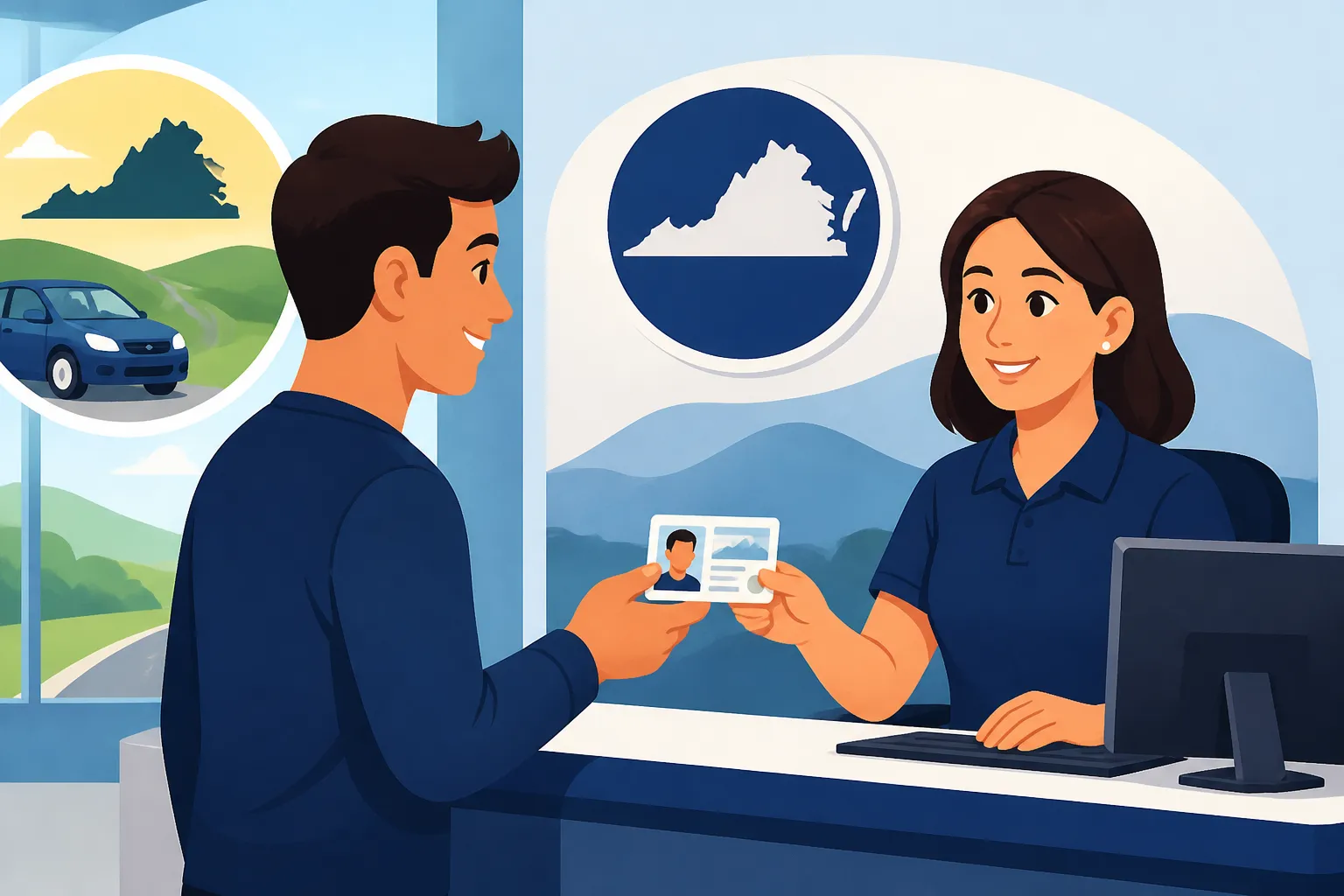
The exact steps depend on the location and the details of your transaction, so think of an office visit as a process to confirm rather than a guaranteed script. You may need to check in, explain the transaction, provide documents, and follow instructions from staff. The agency will determine what applies to your renewal and whether anything else on your record needs attention.
At check-in, describe the complete task. If you only say that you are renewing when you also need a personal detail corrected, the staff may initially direct you to the wrong service. State whether you have an appointment or are arriving as a walk-in, if that applies, and ask what to do next. If the location uses a queue or check-in process, follow the signs and instructions given there. For more on walk-in visits, see How In-Person Walk-Ins Work at Virginia DMV Offices.
When your transaction is reviewed, listen carefully to any questions about your identity, record, or supporting documents. If you do not understand a request, ask what the DMV needs and why. It is better to clarify the requirement before a document is rejected or the transaction is paused. If the issue cannot be addressed at that counter or location, ask what the next step is and whether you need to use another service channel or return with additional evidence.
According to the Virginia Department of Motor Vehicles, every driver’s license applicant is required to take a vision screening. If you have a question about the screening or have a concern that could affect it, ask the DMV what to expect before or during the visit. Do not assume that a previous screening, a recent eye exam, or a personal explanation automatically replaces the agency’s process. If you have supporting information from an eye-care professional, confirm with the DMV whether it is relevant and what form or documentation it accepts.
Before leaving, make sure you understand the status of the renewal. Ask whether the transaction is complete, whether you have any remaining steps, and how the renewed credential will be provided. If the DMV gives you a receipt or other document, ask what it means and whether it has any effect on your driving privileges. Do not infer that a paper handed to you is a temporary license unless the agency explicitly identifies it as such and explains how it applies.
You should also ask how to address a problem if the credential does not arrive or the transaction remains pending. Keep any official paperwork and note the instructions you receive. If a tracking method is available for your transaction, use the official agency’s tool. How to Track Your Virginia Driver’s License Delivery is relevant if the DMV has issued a credential that is being mailed.
An office visit can be useful for resolving questions, but it does not guarantee immediate issuance or delivery. A document discrepancy, record issue, or other review may mean that the DMV needs more information or time to finish processing. Ask what is outstanding, how to complete it, and whether there is a way to check progress without making another trip.
Handle complications without making extra trips
A routine renewal becomes less predictable when the information on your record does not match your documents, you have an unresolved notice, or you need a service beyond renewal. The best way to keep the visit manageable is to identify those complications before arriving and ask what the DMV expects.
Name or address differences
If your current name differs from the name on your license or supporting documents, ask which records must be updated and what evidence is required. Do not assume that presenting one document will automatically change every DMV record. If you are changing your address, confirm whether that update is part of your renewal or a separate transaction and whether it affects the documents you need. The Virginia Department of Motor Vehicles makes the final determination about acceptable evidence.
A mismatch is not always a sign that you cannot renew. It does mean you should avoid relying on assumptions about how staff will reconcile the records. Explain the difference clearly and bring only the supporting documents the official agency says are appropriate. If the issue involves a legal name change, related guidance is available in Updating Your Legal Name on a Virginia Driver’s License.
Missing or damaged license
If you cannot present your current license because it is lost, stolen, or damaged, ask whether the DMV should treat the request as a renewal, replacement, or another transaction. Those terms can refer to different actions. The correct path may depend on the status of your credential and what information is already on your record. Check with the agency before booking a visit so you do not arrive expecting a renewal when you need a different service.
If the credential was stolen, take care to protect your personal information and ask the Virginia Department of Motor Vehicles what steps it recommends. Do not assume that a replacement request also renews an expired credential or resolves a separate record concern. For an online replacement issue, see Replacing a Lost or Stolen Virginia Driver’s License Online.
Notices, holds, or uncertain eligibility
If you have received a notice about your driving record or are unsure whether you can renew, review it and contact the official agency before going to a service center. A renewal transaction may not resolve a separate obligation. Ask what must be completed first and whether you should bring proof that you have satisfied the requirement.
Be especially careful not to treat a general renewal checklist as a determination of your eligibility. The Virginia Department of Motor Vehicles can check the information relevant to your record. If the agency tells you to take a different step, make sure you understand where and how to complete it before traveling.
An office cannot finish the transaction
If staff tell you that the transaction cannot be completed during the visit, ask for the reason and the specific next step. Find out whether you need additional documents, a different location, a separate transaction, or follow-up through an official account or contact channel. If something is pending, ask how you will know when it is resolved and what you should do if you do not receive an update.
Before leaving, repeat the next step in your own words to confirm you understood it. Keep any written instructions, receipts, or case information the DMV provides. This can make a follow-up easier and reduce the risk of starting over with incomplete information.
After the visit: confirm status and choose your next step
Once you have left the office, keep the paperwork from the visit until you have received and checked your renewed credential. Review the name, address, and other printed information promptly. If something is wrong, contact the Virginia Department of Motor Vehicles using its official channels and ask how to correct it.
If the credential is being delivered, follow the delivery instructions the DMV gave you. Do not assume it will arrive on a particular day unless the agency has provided a current estimate for your transaction. If it has not arrived within the period or circumstances described by the DMV, check the official status tool or contact the agency. The article Waiting on a Replacement License by Mail in Virginia covers a related delivery concern, though your situation may differ if the credential is a renewal.
Keep any temporary or transaction document only for the purpose the DMV describes. Read it carefully, including any conditions or expiration information, and ask the agency if you are uncertain whether it permits you to drive. An appointment confirmation, payment record, or proof that you submitted information does not automatically serve as a driving credential.
If you still need to complete another task, verify whether it can be handled online, by mail, or at a different office. A return trip may not be necessary, but do not assume that another service channel is available for your specific issue. Check the official agency’s instructions and use an official DMV account or contact option for follow-up. Handling License and ID Transactions Online in Virginia discusses how to consider online services for related tasks.
For future renewals, note what worked and what caused delays: the documents you needed, the location you used, and any instructions about how your record is maintained. Store the credential and renewal notices somewhere easy to find. If your personal information changes before your next renewal, check whether the DMV expects a separate update rather than waiting until renewal time.
Frequently Asked Questions
Do I have to renew my Virginia driver’s license in person?
Not necessarily. The available method depends on your circumstances and the DMV’s current requirements. Check whether you qualify for online or mail renewal before arranging an office visit. If the agency directs you to renew in person, follow its instructions.
What should I bring to an in-person renewal?
Use the Virginia Department of Motor Vehicles’ current document instructions for your exact transaction. Bring your current license and any supporting documents the agency requires, especially if you are also changing personal information or addressing a record issue. Do not assume that a general checklist covers every situation.
Does every applicant need a vision screening?
According to the Virginia Department of Motor Vehicles, every driver’s license applicant is required to take a vision screening. Ask the agency what to expect if you have a concern or supporting information from an eye-care professional.
Can I use any DMV location for renewal?
Do not assume that all locations handle the same services. Confirm with the official Virginia Department of Motor Vehicles that the location processes driver’s license renewals and ask about its current appointment or walk-in procedure. Find current hours and location details using the official agency’s office locator.
What if I have not received my renewed license?
Follow the delivery or status instructions the DMV provided. Use the official agency’s tracking or contact options if the credential has not arrived as expected. Do not assume a receipt or pending transaction gives you permission to drive; ask the DMV what applies to your situation.
Sources
- Virginia Department of Motor Vehicles — Apply for a Driver's License | Virginia Department of Motor Vehicles (checked November 11, 2026)
Disclaimer
This article is for general informational purposes only and does not constitute professional advice. Laws, prices and regulations vary by location and change over time. Consult a qualified professional for guidance on your specific situation. Virginia Driver Guide is not a government agency and is not affiliated with any state motor vehicle department.